Haptic technology allows players to not just see and hear the action in Esports, but it adds a physical dimension too.
Esports have spent years pushing the boundaries of immersion. Faster refresh rates, larger displays, spatial audio and increasingly sophisticated graphics have all helped bring players closer to the action. But no matter how realistic a game looks or sounds, there is still one major difference between the virtual world and the real one: in real life, we experience everything through multiple senses.
For all the advances in video and audio technology, there is a limit to how immersive a screen and a speaker can be on their own. That is why attention is increasingly turning towards haptics, technology that adds a sense of touch to the equation.
In gaming, haptics allows players to feel what's happening on screen through vibrations, movement and physical feedback. It's not a new idea. Most gamers will already be familiar with vibration feedback in controllers. What's changing is the scale and sophistication of the technology.
Today's players are looking for deeper, more engaging experiences. They don't just want to see an explosion or hear an approaching vehicle. They want to feel it.
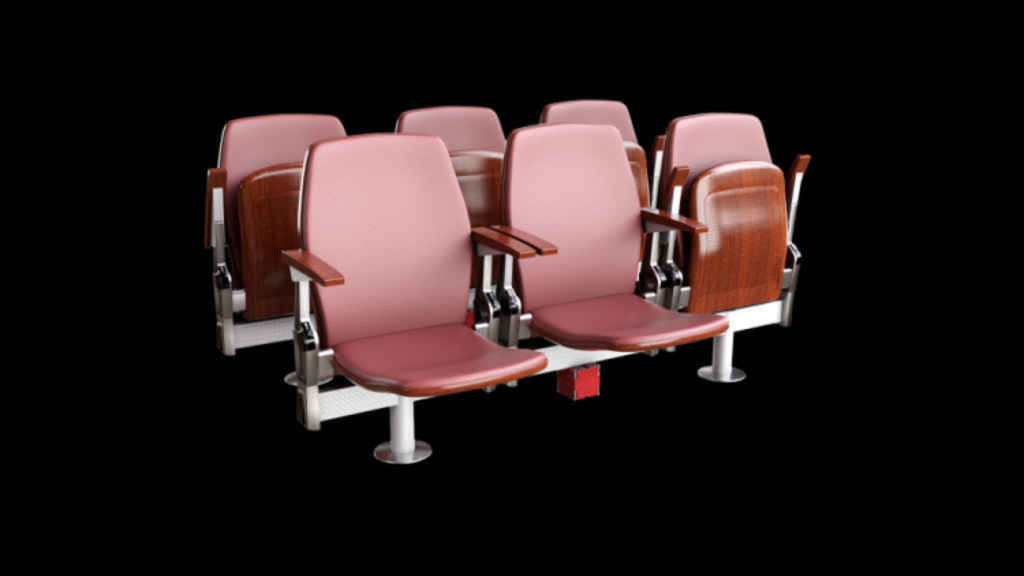
Image: A single inertial-drive Mover provides haptic feedback to multiple seats
Whether it's the recoil of a weapon, the rumble of an engine or the impact of a nearby blast, haptic feedback adds a physical dimension to the gaming experience. It helps create a stronger connection between the player and the virtual environment, making interactions feel more immediate and, ultimately, more believable.
This matters because gamers have become increasingly demanding. The rise of Esports has fuelled investment in high-performance PCs, premium displays, low-latency peripherals and professional-grade audio. Immersion is no longer seen as a nice extra. For many players, it has become part of the overall experience.
Traditionally, haptic feedback has been limited to handheld devices, but that only tells part of the story. Feeling a vibration in your hands is one thing; feeling it through your entire body is something else entirely.
That is why dedicated haptic solutions are increasingly finding their way into gaming chairs, simulation platforms and even venue floors. By extending tactile feedback beyond the controller, these systems create a far more convincing sense of presence.
Of course, timing is everything. Haptic feedback only works when it is perfectly synchronised with what players are seeing and hearing. A split-second delay between an on-screen event and the physical response is enough to break the illusion.
As demand for immersive experiences grows, technologies originally developed for professional AV applications are starting to attract attention within the gaming and Esports sectors.
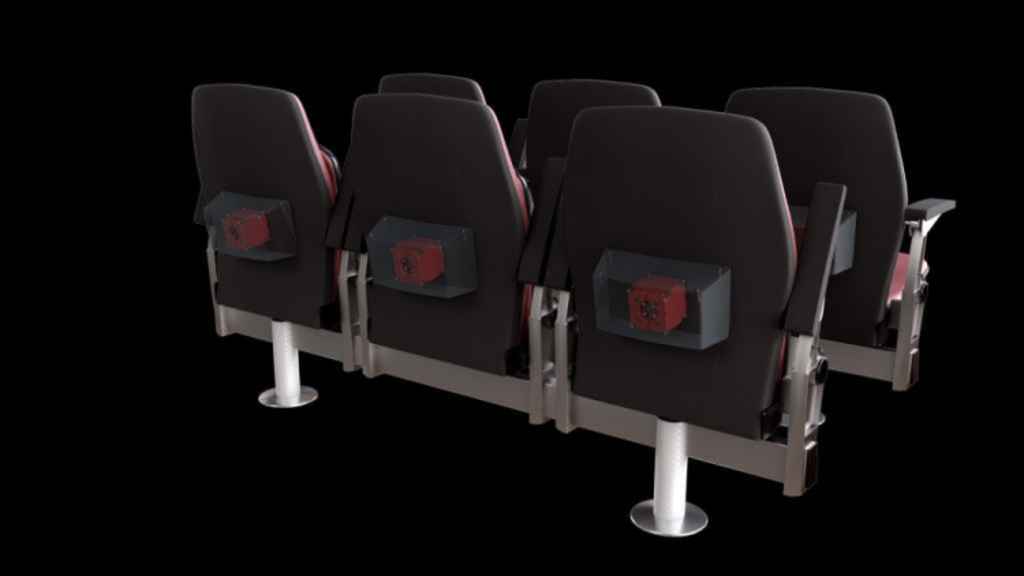
Image: multiple Mover ID units deliver precise haptic feedback to each individual seat
One example is Powersoft's Mover, a low-frequency haptic transducer designed to reproduce sound through tactile perception. Using the company's moving magnet linear motor technology, Mover transfers low-frequency energy through surfaces such as chairs, seats, platforms and floors, allowing users to physically experience content rather than simply hear it.
The difference compared with a conventional audio system is significant. Instead of relying solely on sound pressure levels to create impact, Mover introduces vibration as another storytelling tool. Effects can be subtle and atmospheric or powerful and dramatic, depending on the application.
While the technology has already proven itself in immersive attractions and entertainment venues, its potential within Esports is easy to see.
Competitive gaming venues are constantly looking for ways to stand out and create experiences that justify leaving the house. Big LED screens, impressive lighting and premium audio systems have become standard features, but haptics adds another layer that many players and spectators have yet to experience.
Imagine watching an Esports final in a packed arena. A critical moment unfolds on screen. The audience sees the action, hears it through the sound system, and then feels it through the floor beneath them or the seat they're sitting on. Instantly, the experience becomes more visceral and more memorable.
The same logic applies to gaming lounges, simulation centres and experience-driven venues where operators are trying to offer something that cannot easily be replicated in a bedroom or home office.
From a technical perspective, Mover offers a number of advantages. Its extended dynamic range allows it to reproduce everything from subtle environmental effects to powerful impact moments with impressive detail. It can also deliver localised haptic feedback, enabling different areas within the same installation to experience different tactile effects.
Reliability is another important consideration. Gaming venues are high-usage environments where equipment is expected to perform day after day with minimal downtime. Built around moving magnet technology, Mover has been designed with long-term durability in mind, reducing maintenance requirements and operational headaches.
Efficiency is equally important. With energy consumption becoming an increasing concern across the AV industry, products that can deliver strong performance without excessive power requirements are becoming more attractive. By taking advantage of Class-D amplification, haptic systems can achieve significant efficiency gains compared with more traditional approaches.
Ultimately, the lesson for Esports is a simple one. Immersion isn't just about sharper images or louder sound systems. It's about convincing people that what they're experiencing feels real.
As gaming technology continues to evolve, haptics looks set to play a much bigger role in how players and audiences engage with content. For Esports venues, simulator manufacturers, gaming chair designers and AV integrators, it offers a practical way to create experiences that are more engaging, more memorable and, quite literally, more tangible.
The future of immersive gaming won't be built on visuals alone. It will come from combining multiple senses into a single experience, and touch may prove to be the ingredient that brings everything together.
www.powersoft.com