Paul Milligan finds out how a streaming first mindset changes how Esports events are captured, produced, and delivered.
The world of Esports splits the generation gap right down the middle, for those aged over 40 the concept of watching other people playing video games, rather than playing the game yourself, as that generation grew up doing, can often illicit an utterly perplexed response. Yet for those under 40, watching highly skilled players of League of Legends for example, has become as valid as watching traditional sports matches, and just as popular in terms of audience numbers for those involved. And often highly lucrative too.
Coverage of Esports differs too from traditional sports, Esports does not start with traditional linear broadcast and then add a stream. In many cases, streaming platforms are the primary audience, with in-venue presentation, social clips, secondary feeds, co-streams, multilingual outputs and VOD all built around that.
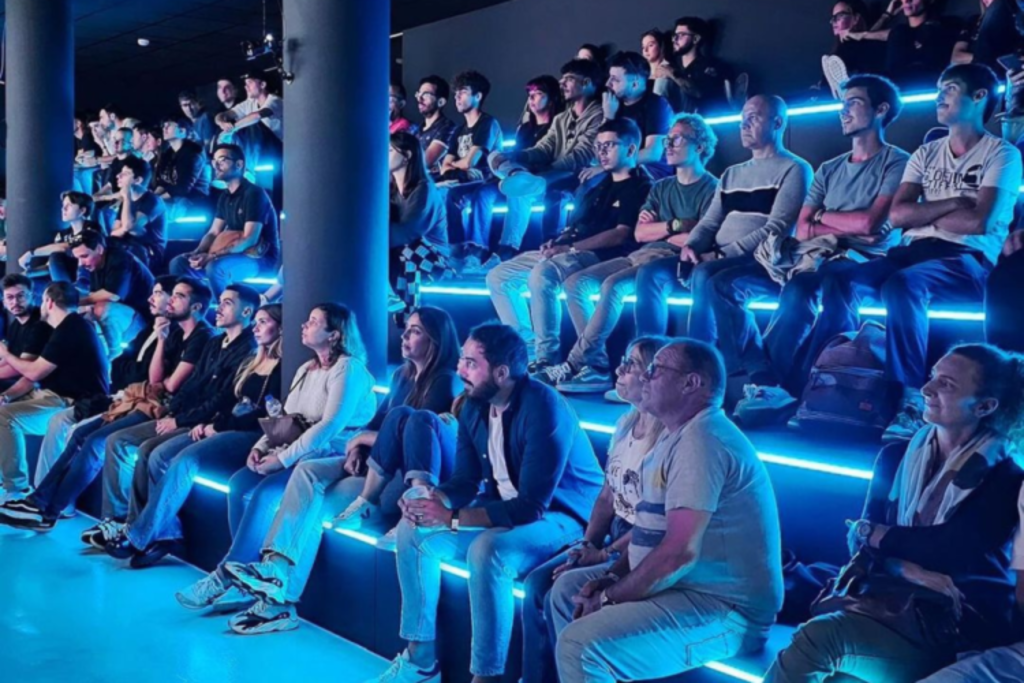
We spoke to suppliers and installers of technology to Esports events to explore how those factors change the way events are captured, produced, routed, communicated and delivered.
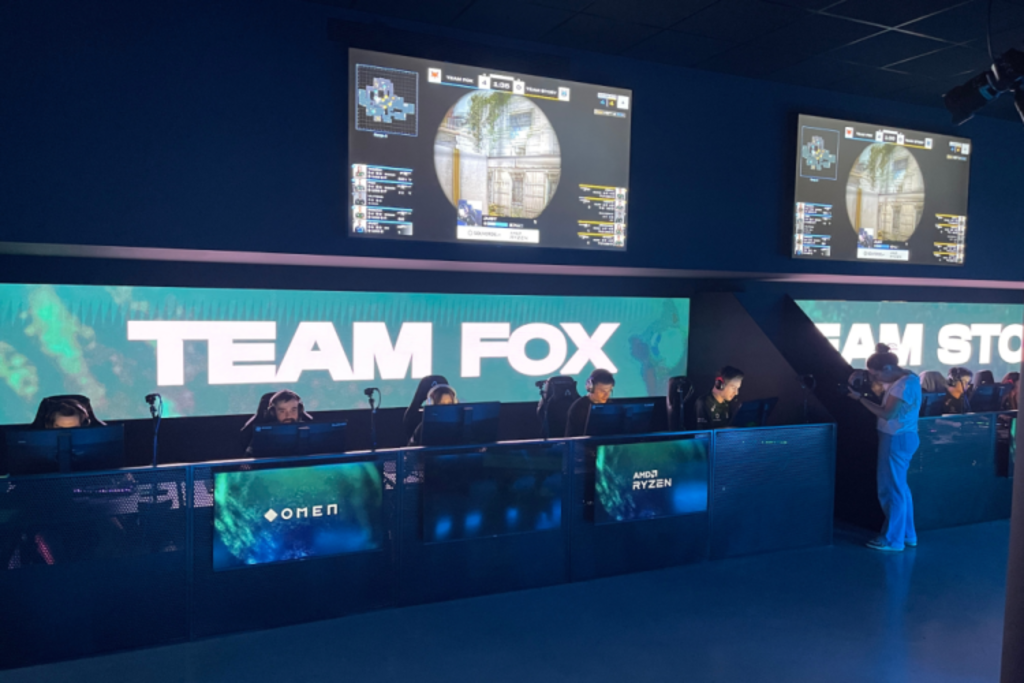
Because Esports has grown up as a streaming-first format, how does that change the way events are produced compared with a traditional broadcast model? From a venue and technology integration perspective, the difference is quite significant says Daniel Afonso, marketing director from systems integrator Edigma. “In a traditional venue, you usually have a space that is prepared for an event and then the production team comes in and builds around it. In an Esports venue, the technology and the space have to be ready all the time. At SAW Esports Arena (an Inavation Awards 2026 finalist), for example, there are two gaming rooms, two streaming rooms, a media room with an LED wall and a fixed studio, as well as the Pro Arena, which is around 800 square metres. Different areas can be used for different purposes and potentially need to feed different outputs. That changes the way you approach the integration.
“Take displays for example,” he adds. “They are not just selected for how they look to someone standing in front of them. They also need to perform well on camera, so factors such as refresh behaviour, processing and how the display interacts with the camera becomes much more important.” The same applies to cameras and production positions he adds. “You cannot really think of them as something that will simply be added when an event happens. Power, connectivity, positioning and sightlines all need to be considered from the beginning. And then there is the content side. The screens are not there only for match days. They are part of the venue’s day-to-day operation, so content management becomes an ongoing requirement rather than something organised for a particular event.”

Esports was built for digital platforms such as Twitch and YouTube rather than traditional linear television, and that fundamentally changes the workflows says Rainer Stiehl, VP marketing Europe at Extron. “Pro-AV integrators are discovering the demand to shift signal management from traditional SDI routing to a AV-over-IP network. Esports production relies heavily on observers navigating 3D game engines alongside physical stage cameras and automated graphics tools ingesting real-time gameplay data. Instead of designing static control rooms for a single broadcast output, integrators deploy a scalable IP-based system that can ingest dozens of dynamic software sources and simultaneously distribute custom feeds to digital audiences, typically across multiple platforms. Esports productions are often built around software-based workflows using platforms such as OBS Studio, Streamlabs, and vMix, alongside professional production and AV systems.”
Pete Emminger, global CTO at systems integration group Diversified has a broadcast background and has produced a number of Esports broadcasts, including the first Esports broadcast on US television on ESPN back in 2015. “When people started streaming it was a lot of creators and it was not monetised, it was very loose. The evolution of Esports is really about the monetisation story needing to professionalise the environment. Today there’s a lot of monetisation capability that the streaming platforms have brought in that parallels television, and in some ways, actually exceeds it. At a basic level nowadays, a stream and a linear TV broadcast often get produced similarly from a technical perspective. At a high and professional level, like a tier one show that might be television quality, even if it’s a streaming show, those are pretty similar today.”
With reaction speeds of the players measured in milliseconds, is latency the biggest issue at play in Esports, both in the arena and for those watching or playing at home? What tips are there to ensure lags are kept to a bare (or barely noticeable) minimum? There are two sides of latency when you talk about Esports explains Emminger. “The first is on the competition side, and it’s an area people don’t talk about. Sometimes in Esports, especially when the competitions are at home or in other, less controlled environments, you actually have to add enough latency to prevent cheating because otherwise players can watch the stream. It’s called stream cheating. So sometimes you actually have to add multi-minutes of buffer time before the stream hits the public. That’s one thing that is often a nuance when people talk about this, they don’t really think about the competition integrity side.”
On the latency side – in terms of gameplay, player, and broadcast latency – viewers today expect a show that’s stutter-free and high quality, he adds. “Your internet connection where the show is being produced is critical. Another important aspect is how they’re accessing the game server environment, because that’s a big part of the overall experience of the broadcast and for the players to have a good play environment. I think the publishers that do a really good job work with Esports developers and Esports publishers to make sure that they have a good environment for pro players.”
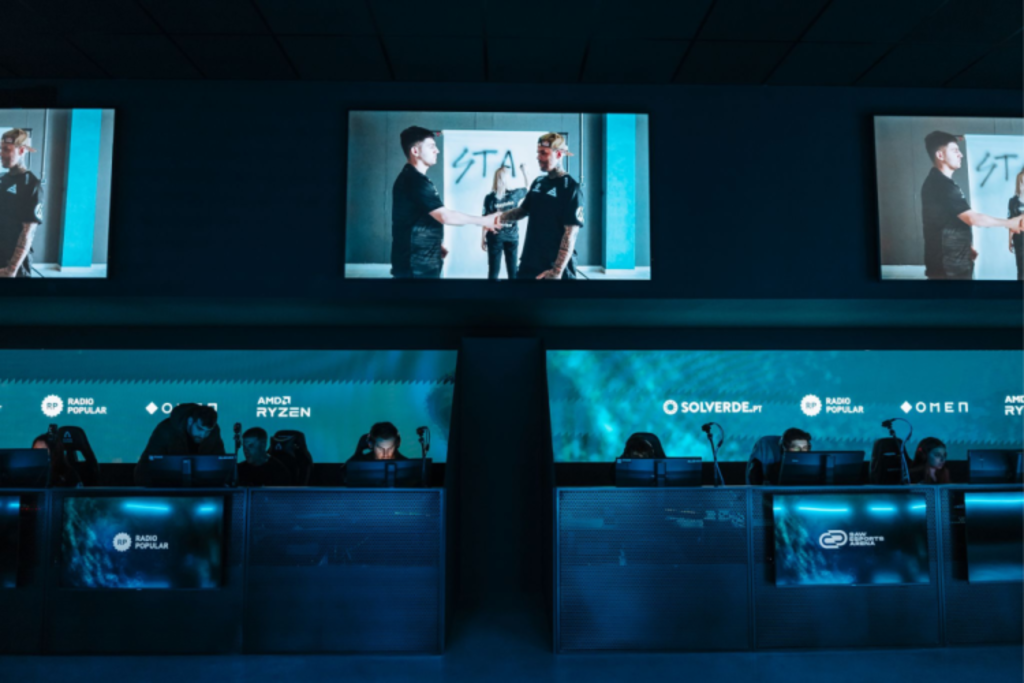
Near zero-latency switching and distribution is one of the most important technical considerations in Esports says Stiehl. “The larger challenge includes reliability, synchronisation, competitive fairness, and overall audience experience. The requirements are also quite different for in-venue productions versus online streaming audiences. A delay of just 20 milliseconds can shatter a tournament or make the live production unmanageable.” Stiehl also highlighted the issue of cheating that can occur when streams aren’t at the optimum level, but there are other issues too: “The challenge online is managing stream jitter, audiovisual sync drift, and platform delivery lag, particularly in keeping remote streamers synchronised with the main gameplay feed across various time zones.”
It’s important to focus on the parts you can control says Afonso, such as the displays, processing, cabling, network architecture and the way the different systems are connected. “The goal is to make sure that once the signal enters the building, the technology is not adding unnecessary delay. This is why the infrastructure needs to be considered from the beginning. Network segregation, signal paths, processing, and display performance all have an impact, and small delays can become noticeable when they are repeated across several parts of the system.
I wouldn’t say latency is simply an Esports venue problem, it’s a complete signal-chain problem, and every part of that chain needs to be designed with latency in mind.”
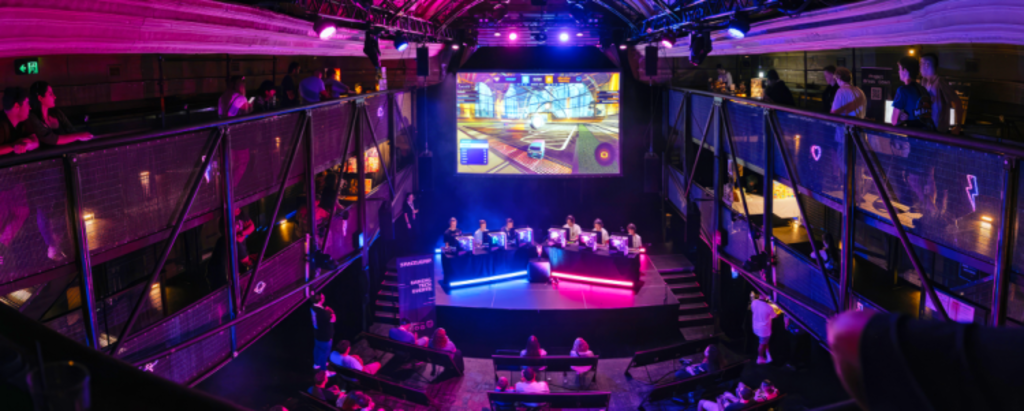
Integrators can minimise noticeable lag by designing the entire workflow around low-latency transport protocols adds Stiehl. “That includes using high-performance network infrastructure, minimising unnecessary processing stages, maintaining synchronisation across systems, and selecting transport technologies designed for real-time media delivery. In Esports, success isn’t determined by a single low-latency component, but by ensuring the entire signal path remains predictable and synchronised from gameplay capture to final delivery.”
Esports may feel like an arm of the broadcast sector, but as the recent trend for increased pro-AV/broadcast convergence has shown, AV is now firmly in the mix too. Just how vital is the AV backbone becoming to Esports? After all, routing, switching, AV-over-IP, signal distribution, low latency, source management, and control all have to get the right content to the right displays, production positions and outputs. Again, it’s a case of the network backbone being the most critical aspect says Emminger. “You will often need to start your system design with network topology or network requirements in place first, because it can be very hard and a very costly mistake if you do it later in the process.”
Emminger references a joke told in the live events sector: where would the lighting designer put the lights if they had their way? And the answer would be right in front of the speakers, because people are tunnel visioned and tend to only think about their own area of expertise. “The people who aren’t engaged with the network team don’t often think about networking, but nothing works without it. We call it infrastructure, which makes it sound boring, but it’s not, it’s super critical,” he adds.

The AV backbone is absolutely critical in an Esports venue says Afonso. “But for us, the challenge starts before the displays themselves. It is really about managing a large number of sources and being able to move those signals around the venue when you need to.” This is simply because of the sheer number of outputs you are dealing with: “You have player machines, observer positions, coaches, cameras, graphics, communications, and production systems, and any of them may need to feed different displays or production positions. The configuration can also change depending on what is happening in the venue. That is where an IP-based approach becomes particularly useful. It gives you much more flexibility in how you distribute and manage those signals, without having to physically change the infrastructure every time the space is used differently.”
An integrated approach to the AV infrastructure is essential to Esports because it’s what transforms a room full of gaming PCs into a competition, training, and content creation environment says Stielhl. “Routing, switching, AV over IP, signal distribution, source management, and control are what enable gameplay, player communications, live production, streaming, coaching, replay review, and audience engagement to all happen simultaneously.
The AV infrastructure must support the movement of content throughout the facility. Gameplay feeds, observer stations, team communications, graphics, production systems, venue displays, and streaming platforms all require reliable, low-latency signal transport.”
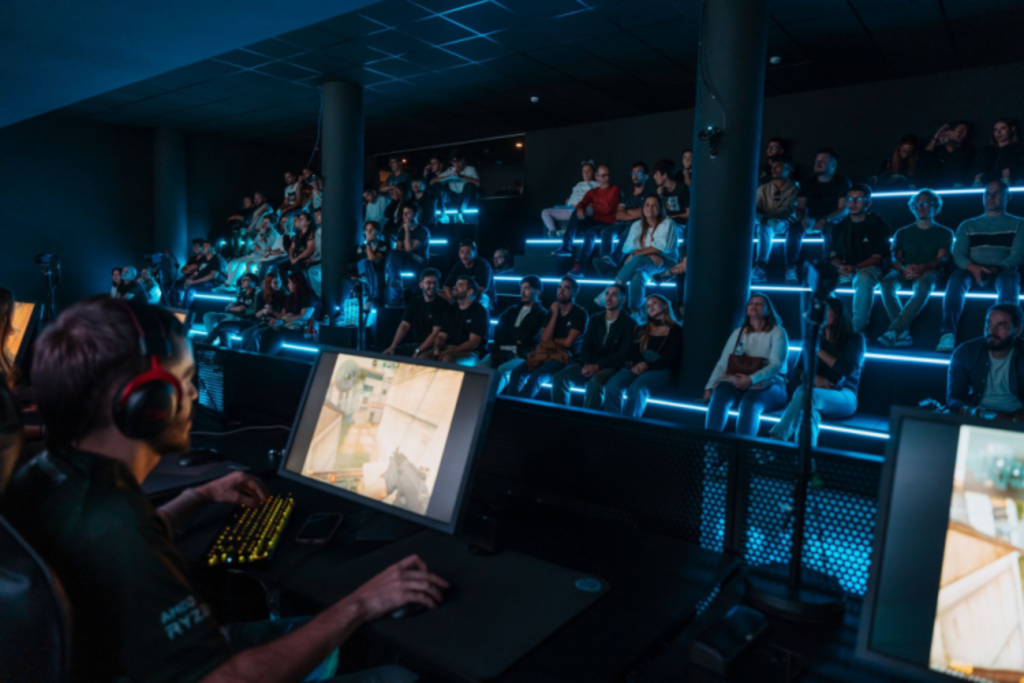
We’ve already mentioned the sheer number of outputs an Esports event can create, which all have to be transported and transmitted, with social media adding another element into the mix. How can you make sure the various outputs from an Esports event – player POVs, replay packages, social clips etc – provide the content needed by broadcasters and promoters? There are two ways says Emminger. “Some of the publishers take an approach where they have a highly controlled environment. It’s very well planned out, and they provide the bespoke feeds or access to content. And you just plan the systems properly, whether that’s live streaming systems, transcoding to get the right streams to the right people. Other publishers take a slightly different approach, they put out more generic feeds for content creators to just grab and then use for themselves and do it their own way.”
The two different approaches go back to how different publishers, and different Esports producers monetise their content he adds. “Some of them do it by selling the streams and some of them let other people monetise and they look at it more as marketing ROI. Ultimately, it’s looking at those different requirements and making sure that you have systems in place to meet them.” The key is building an Esports workflow that allows every source to be captured once and distributed wherever it’s needed, adds Stiehl.
With TV there’s one output, aka the viewer at home, albeit they are being entertained with different shots from a range of camera angles. For Esports we are talking about having to satisfy three or four different feeds, does this add of lot of extra difficulty? Some of these bigger projects don’t have three or four feeds, but dozens explains Emminger. “It’s paralleling the sports environment today. There’s so many different feeds and feed types, and when you get into these bigger distribution environments, such as international multi-language events, you get different partners that have different requirements. Esports is unique, and probably only parallels some of the major international sports competitions. Because different countries have different laws, in some countries you can show alcohol adverts and in some countries you can’t. And so you end up with country specific special feeds that have either extra ads inserted or things removed.”
When Emminger ran the production department at video game developer Activision Blizzard, most of the productions were in at least six languages, but often 15, “Fifteen languages matched the number of languages the games were produced in. We felt we owed it to our community that if we made the game available in a language, that Esport content should be inthat language as well.”
With so many outputs that a team has to deal with during an Esports broadcast, is this where AV kit can help? A single event may require feeds for player stations, coach displays, shoutcasters, audience displays, replay and production monitoring, live streaming platforms, recording systems, and remote viewers, all at the same time says Stiehl. “Extron’s signal distribution, image processing, audio, streaming, and control products form a flexible foundation for addressing these requirements.”
It’s not necessarily one specific type of equipment or manufacturer that can help, instead it’s flexible systems that are of most use says Emminger. “In Esports the general technology trend has been to move to IP and then move to software that runs on generic servers.” That’s a trend also happening in professional level sports, news, and professional workplace AV environments too, he adds. “The interesting thing is the Esports environment has actually been moving that way for 10-15 years. Tools such as VMix [live streaming software], for example, are really starting to mature, but started in the Esports space as low level production tools and have now become professionalised. When you move into a software environment, you get a much more flexible processing environment, and that allows you to do more things with less hardware, with less resources. I’d say the overall general trend is this continuation of the tools moving to software, which puts you in a flexible environment to then deliver more things and be more agile.”
Final word goes to Edigma CEO Miguel Oliveira, with some wise words for any integrator thinking of entering the world of Esports; “The evolution of eSports venues is not simply about adding more technology. It is about making sure the technology works together to deliver an experience that is immersive and reliable.”