Should centuries-old churches look to reach a new audience by doubling up as entertainment venues? Paul Milligan speaks to Sam Dimond of Spotlight Sound to find out more.
The recent news that London’s cutting-edge nightclub Fabric has signed a four-year deal with St Paul’s Cathedral to host music events has sparked debate. Should churches, including historic venues such as St Paul’s, which dates back to 1697, look to become entertainment venues? Some are unhappy that sacred buildings are being used to host raves, crazy golf courses, and movie screenings. Others see it as a creative solution to keep churches and historic buildings open and financially sustainable, and for them to remain relevant to a new generation.
Inavate spoke to Sam Dimond, owner of event production and AV installation company Spotlight Sound, which designs and installs AV systems including sound systems and screens to support modern worship, live streaming, concerts, community events, and accessibility needs, to find out if this trend is a genuine opportunity for the wider AV market to benefit from.
With church service attendances falling, especially among young people, is this a battle for survival in the 21st century? “Yes, definitely. A lot of places now are really looking at what they need to do to be different, to get more people to come in,” says Dimond.
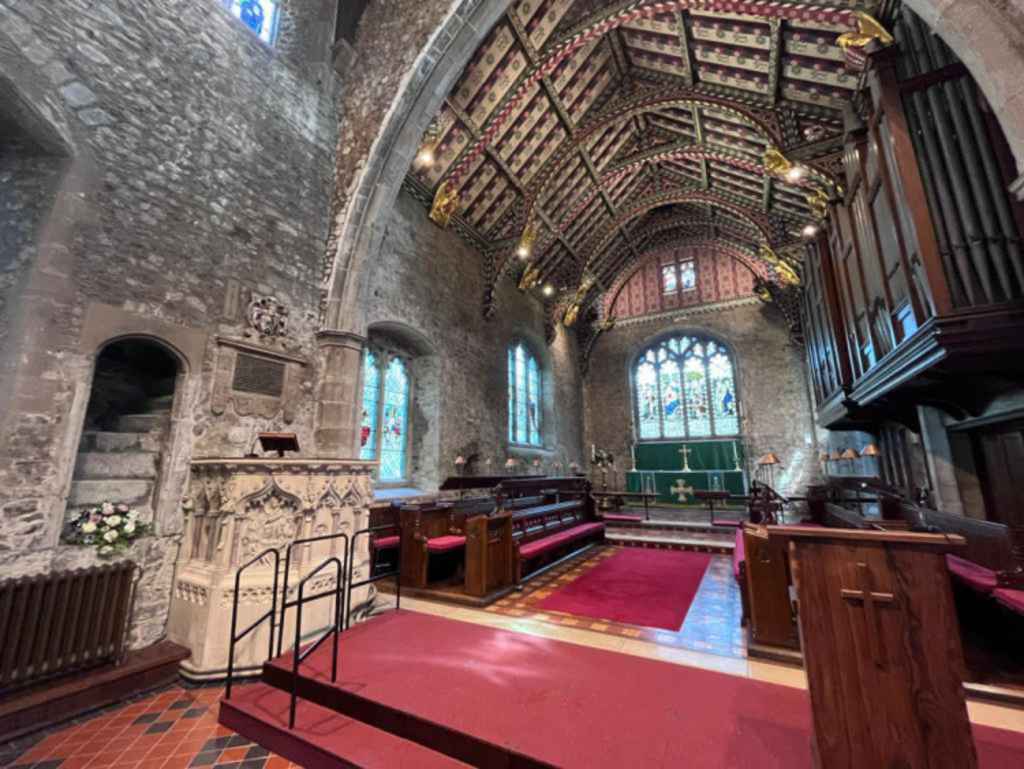
Above and top image: Spotlight Sound project at St Marys Church in Prittlewell
Can traditional churches, particularly smaller ones, afford the basic AV equipment needed to transform their spaces into entertainment venues? Or does Dimond believe they can’t afford not to invest if they want to survive? “The churches we’re surveying now (I saw three last week), every single one is considering how futureproof the space is, how they can integrate more music, to bring bands in, and have a sound system or an AV system that’s capable of doing that,” answers Dimond.
Who is it that the AV sector needs to convince that AV technology is a good fit for these venues? Do priests and vicars typically make these decisions, or is there a parish committee that holds the purse strings and ultimately has the final say? It varies depending on the church and the denomination, says Dimond. “It can be a church warden or the vicar or priest. Sometimes there is a wider committee involved. There are various people who have to be involved in conversations, and these things always take time. Whenever we get an inquiry for a church, we know it’s probably a six-month lead time minimum. Quite often with the buildings, they need to have permission for new equipment, to fix things on walls etc. It’s something that needs to be thought about much earlier than more conventional venues. Getting the right people on board early is important.”
Can it be difficult to convince those in charge of a church budget that investing in AV is worthwhile? It can come down to who the leader of that particular space is says Dimond. “Some are very stuck in their ways, the committee has been the same for the last 20 years and they only want to do one thing. And whenever you suggest anything different it’s a no, 'this is how we do things'. On the flip side, there are several we’ve been to who have got much more progressive people involved who see it as an opportunity to really get more people into the space, into the church.”
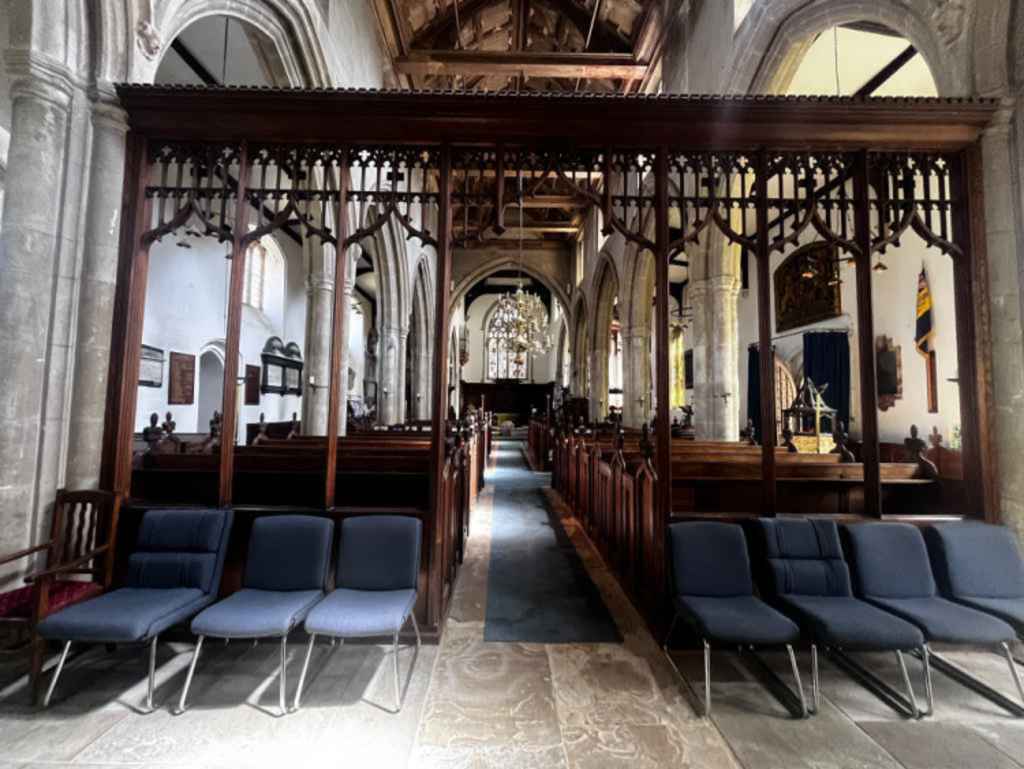
Spotlight Sound project at Thaxted Church
Key to this growth is the ability of those running churches to look beyond traditional activities, such as Sunday services, weddings, baptisms, and funerals Dimond cites one recent example where a church has been utilising its outdoor space. “They’ve got a village green out the front and they do a lot through the summer, like fêtes and bringand-buy sales, which puts the church at the centre of that community. In their case, they needed to upgrade what they’ve got inside, but they also want the ability to expand to the outside. They put up a marquee and they’re able to do other events and things as well. It is such a varied workload, but I think ultimately these venues have to do something to stay relevant in their communities.”
Is the message getting through to those in charge that turning a religious space into something else when it might otherwise be closed can provide extra revenue? “The church is probably not that commercially minded. It’s all very volunteerled, so you are leaning on the time and resources of those people, who are not necessarily employed to run the building or to generate extra income,” says Dimond. “What they’re asking for today is very much about how they can improve their space, but also how they can support that community or congregation and how they can build that up, rather than thinking more commercially.”
As anyone who has ever installed AV into a church will know, these can be challenging environments to work in, with idiosyncratic architecture and heritage protections to navigate. Does that put some churches off looking at installing AV technology? “It does put people off to the point where they let it get as bad as they can before they will do something about it. A lot of systems we go to are 30, 40, 50-years old and haven’t been touched for that long and they have finally given in to the idea they need to do something about it.” When you get a church project, it’s important to tread carefully adds Dimond. “It’s about being sensitive to the space, we aren’t trying to put really massive, big black speakers on walls, you have got to be careful and be sensitive to what’s around you.”

Sam Dimond
Can this be a tricky, occasionally difficult market to sell into for AV companies? It’s not a straightforward, admits Dimond. “It’s a market where they are really looking for a company that’s going to respect the site, they are looking for a level of trust. If you start an AV business looking just at this market tomorrow, you’re going to struggle. You need proof, case studies of where you’ve been and what you’ve done before. A lot of it is recommendations from other churches, and they are very tight-knit.”
For churches looking to invest in AV for the first time, is there a ‘starter pack’ of equipment that could make the initial investment less daunting? For those with no existing AV systems, Spotlight often starts with a lectern microphone, pulpit microphone, and sound reinforcement, “just so that the Sunday service and the sermons are coming across clearly,” says Dimond. “On the video side a lot of churches are still using hymn books, but if they can do a screen or projector and a pull-down screen it does help. You do have to consider with (installing) video the average age of the congregation (which is quite elderly), so can they actually see a screen at the front of the church?”
Finally, how big an opportunity does Dimond feel this is for churches to turn themselves into entertainment venues, to make themselves more relevant in the local community but also increase income at the same time? “Done in the right way it could be very good for churches. We know we’ve got to have volunteers involved (to run the AV), but if they can invest in the space and open the doors to new types of events, you’re going to improve revenue, but you are going to bring people into these spaces that might not have come otherwise. Churches need to do this more than ever, we know less people are going to church, and this is a very good way to get more people into church, but also to bring in more funds, so they can do more work in the community.”