Danish theatre sound design and production company Tone Art has adopted Sennheiser Spectera across its musical productions, using the wireless ecosystem to simplify touring workflows and reduce setup time between shows.
Tone Art first tested Spectera on Moulin Rouge at the Copenhagen Opera House with support from Sennheiser, before going on to deploy it across around seven musicals over the past 18 months.
The company said the system has allowed it to maintain a consistent wireless infrastructure across productions of different sizes rather than repeatedly rebuilding and reconfiguring systems as channel counts
change.
Tone Art co-founder Tim Høyer said: “We didn’t have any issues at all. It was just working from the get-go. It was hard to believe, and we’ve been using it ever since.”
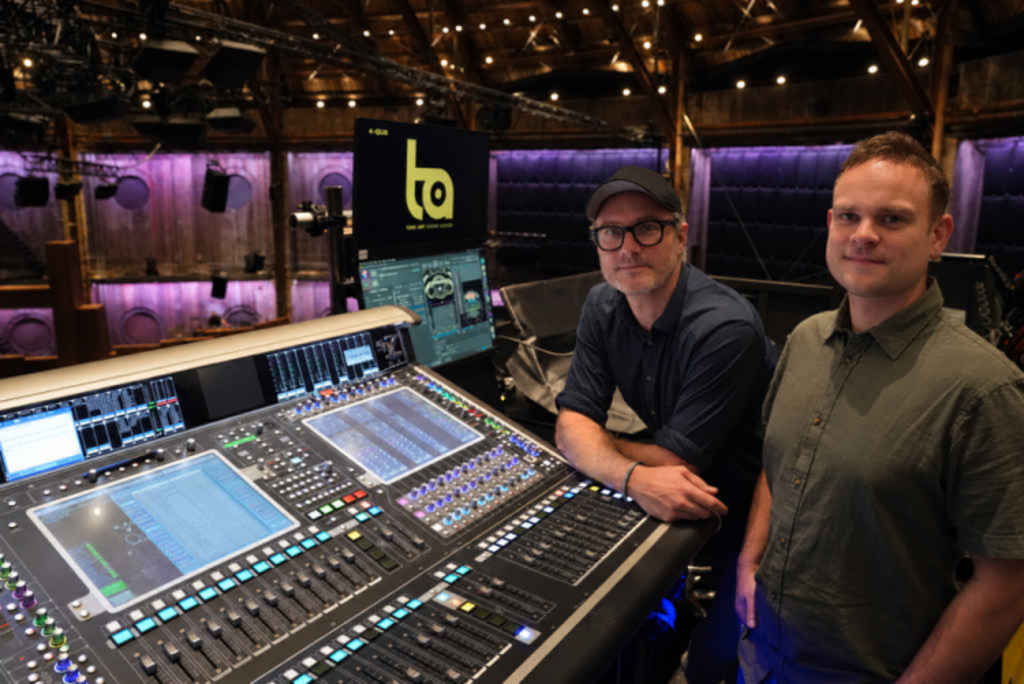
Jeppe Søndergaard of Tone Art added: “All the problems we would normally face in situations where we use that much wireless, in the Opera House or anywhere else, were gone.
And that was kind of scary.”
A key change for Tone Art has been Spectera’s use of a single bodypack for different functions, simplifying equipment management for performers and production teams.
Høyer said: “But having just one bodypack made it the easiest swap we’ve ever done. The actors love the fact that you can control the volume, lock it, and change settings
from the software.”

Tone Art is also using Spectera Base Stations to reduce rack requirements and maintain a common infrastructure as productions scale.
“If we use eight bodypacks or 30, our entire system and infrastructure can be the same,” said Søndergaard. “We don’t need to make lots of changes because, just in our normal setup, we can squeeze in two more units, and
then we have it all on a Mac. It’s just so much easier. Before if we needed 20 in-ear monitors, then 24, that would be a big difference.”
The company said the approach also reduces networking requirements, with fewer IP addresses required for systems involving multiple in-ear channels and wireless devices.
Another significant benefit has been setup time. Tone Art estimates that
around half a day can be saved on tasks including labelling, scanning, configuring and synchronising bodypacks, while the latest Spectera WebUI software also allows settings to be copied more easily.
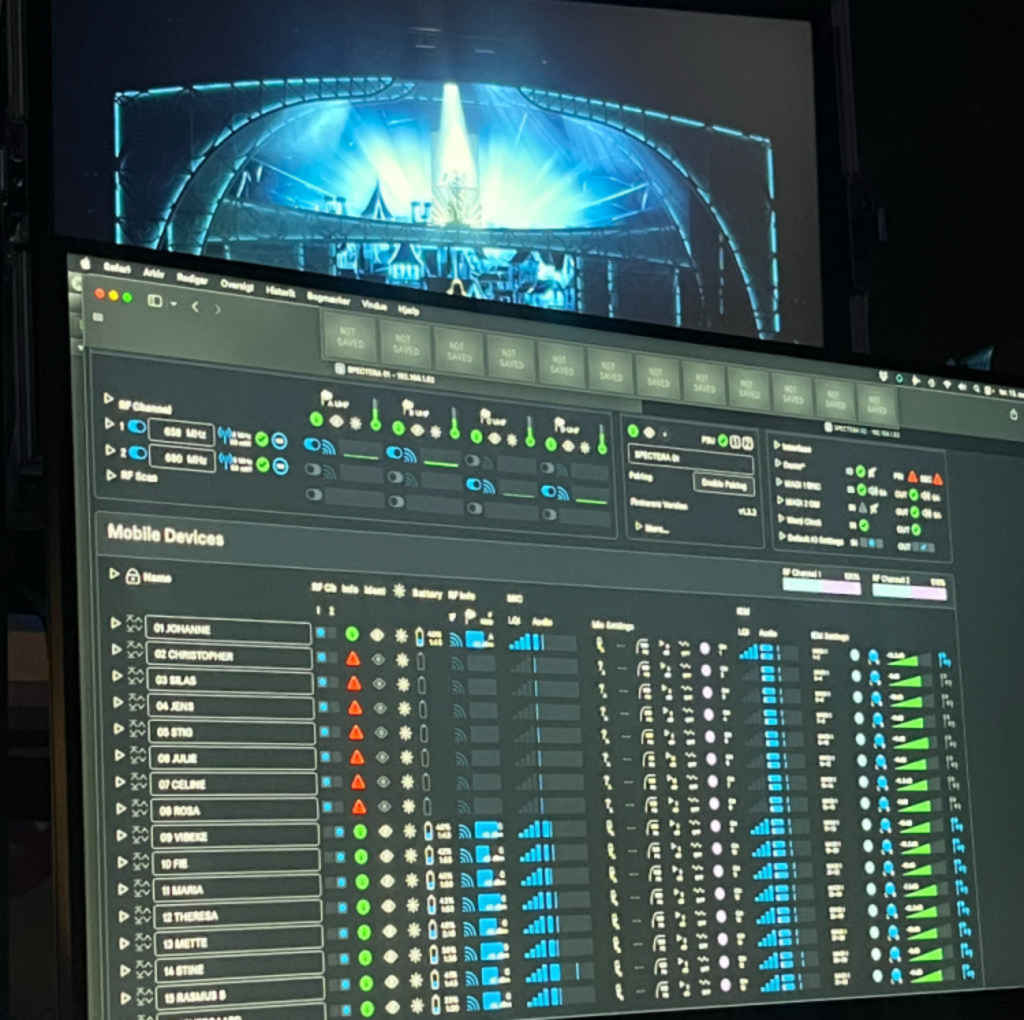
The biggest gains, however, come when productions move between venues.
“But the biggest time saving is when it’s on tour,” said Søndergaard. “We can simply open the software, plot in the areas we
need and it’s ready to go. That’s a lot of manpower and hours saved every time we move a show, and a lot of headaches removed.”
He continued: “It used to be that the lead actors got the best frequencies, and then we’d sort out the next one and the next one. Whereas with Spectera, it works really well for everyone.”
Tone
Art is also preparing a production involving up to 40 actors using in-ear monitoring, where limited space within the set prevents the installation of enough loudspeakers. The company expects Spectera to reduce both the physical system footprint and rental requirements for the production.
“With Spectera you can rent a system for a lesser price and still get the in-ear part as well, so
it seems like a no-brainer,” said Høyer. “I really believe there’s no other system like it.”
Tone Art has used Spectera on productions ranging from Moulin Rouge at the Royal Opera House in Copenhagen to Østre Gasværk’s De Vilde Kaniner. The system will also be used on Tina The Musical and a production of Evita at the Royal Danish Theatre later in 2026.